July 14th 2026
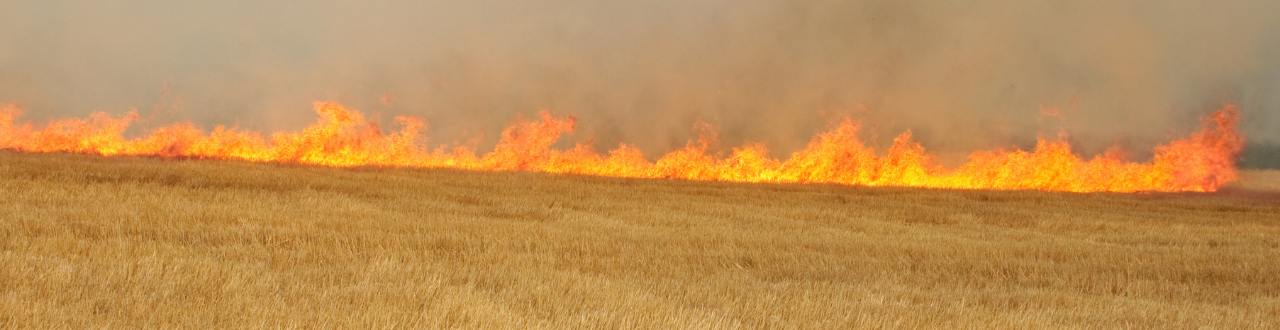
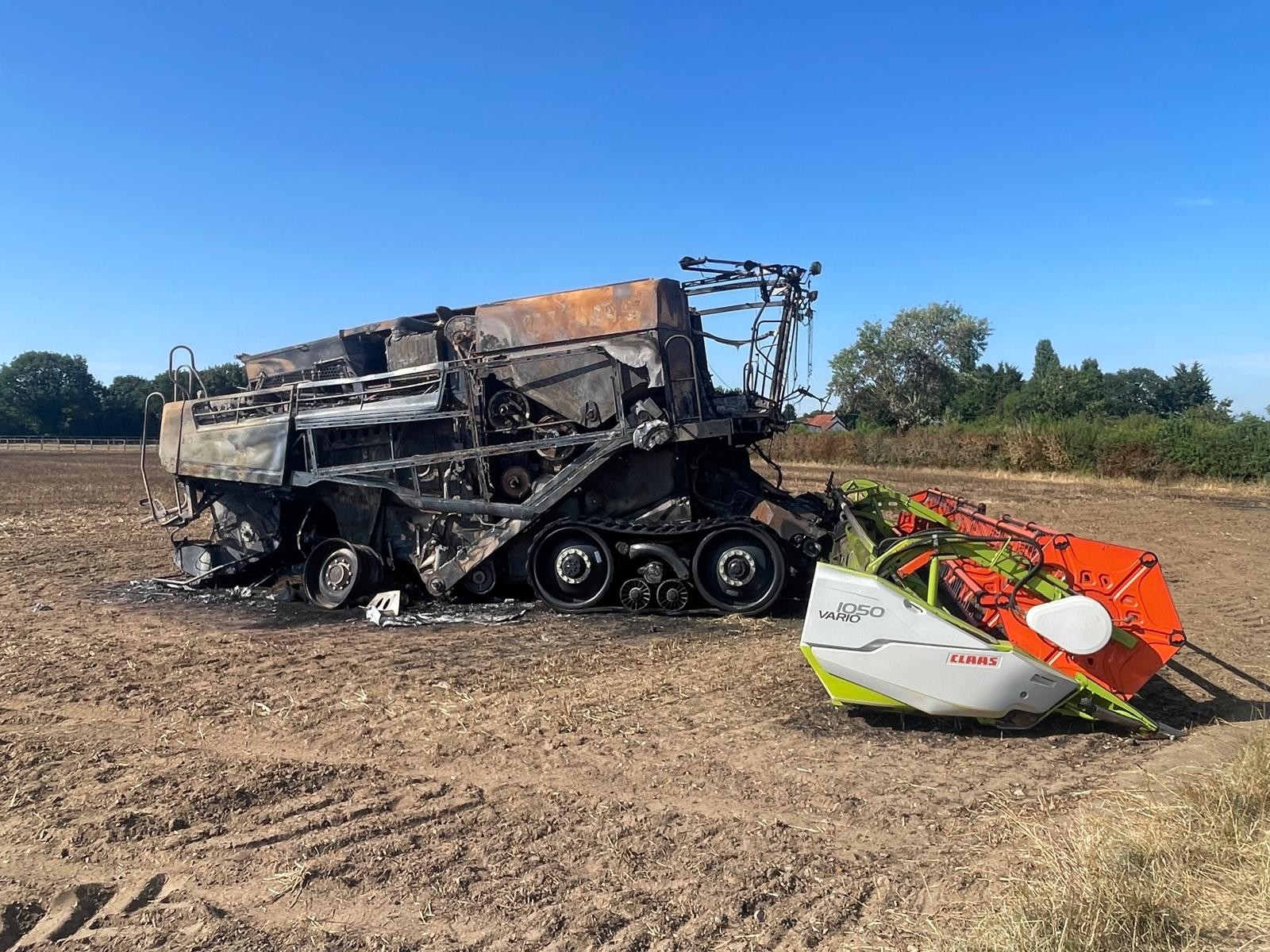
Every harvest, insurers see claims arising from combine fires, machinery breakdowns and field fires. What can begin as a small mechanical fault can quickly escalate, threatening crops, machinery, buildings, neighboring land and, most importantly, people.
While no one can eliminate the risk entirely, taking sensible precautions before and during harvest can make a significant difference to both safety and the financial impact of an incident.
Fire prevention starts with machinery maintenance
Modern combines operate in demanding conditions, where dust and straw can accumulate around hot engine components. Regular maintenance and cleaning remain the first line of defence against fire.
Before heading into the field, operators should:
• Use compressed air to clean the combine at least twice a day, paying particular attention to the radiators, engine compartment and other hot components to remove accumulated dust, straw and crop debris that could ignite.
• Inspect bearings, belts, electrical wiring and hydraulic hoses for signs of wear, damage or overheating.
• Check for hydraulic leaks and ensure cooling systems are working efficiently.
• Follow manufacturers’ servicing recommendations throughout the harvest period.
• Stop work immediately if unusual smells, smoke or warning lights are detected.
A few minutes spent cleaning and inspecting machinery each day can significantly reduce the likelihood of a fire.
Where practical, consider harvesting during the evening or overnight when temperatures are lower and crop moisture levels are typically higher. These cooler conditions can help reduce the risk of fire while also improving moisture levels in the crop.
Consider automatic fire suppression systems
With many modern combines costing hundreds of thousands of pounds, protecting these high-value assets has never been more important. Automatic fire suppression systems are designed to detect a fire in its early stages and discharge a fire suppressant within the engine or machinery compartment before flames have an opportunity to spread.
As machinery values continue to rise, many farmers now view fire suppression systems as an important investment in protecting both their equipment and their harvest. Some insurers also look favourably on these systems as part of a farm’s overall risk management strategy, although any insurance benefits will depend on the individual insurer and policy.
Be prepared if the worst happens
Even with good maintenance, fires can still occur, so having the right equipment readily available is essential.
Every combine should carry suitable fire extinguishers that are regularly inspected, maintained and easily accessible.
Many farms also position a water bowser close to harvesting operations so that water is immediately available if required. Ideally, the bowser should be equipped with a high-pressure hose, enabling operators to tackle small fires quickly and effectively before they have an opportunity to spread.
Keeping a tractor and cultivator nearby can also prove invaluable, allowing operators to create a firebreak quickly and help prevent flames spreading through standing crops while waiting for the fire and rescue service to arrive.
Everyone involved in the harvest should know where firefighting equipment is located, understand how to use it safely and know the procedure for contacting the emergency services.
It is also worth ensuring everyone working on the farm has downloaded the What3Words app. In an emergency, it enables callers to provide the emergency services with a precise three-word location, helping them locate remote fields and access points much more quickly than relying on a postcode or verbal directions alone.
Put people first
Harvest is one of the busiest and most physically demanding times of the year. Long days and fatigue can increase the likelihood of mistakes, making it even more important that operators take regular breaks and remain alert.
If a fire cannot be brought under control safely, personal safety must always come first. Move away from the machinery, alert anyone nearby and contact the fire and rescue service immediately.
Is your insurance keeping pace?
Before harvest reaches its peak, it is also worth reviewing whether your insurance arrangements remain appropriate.
Agricultural machinery values have increased significantly in recent years.
If insured values have not been updated, there is a risk that combines and other harvesting equipment may no longer be insured for their full replacement cost. In the event of a claim, underinsurance could result in a reduced settlement, leaving the business to meet part of the replacement cost itself.
It is also important to consider the wider financial impact of a major fire. Beyond repairing or replacing machinery, a serious incident could lead to:
• The cost of hiring replacement machinery during harvest.
• Delays affecting crop quality or yield.
• Business interruption if harvesting cannot continue.
• Damage to neighbouring crops, land or property, potentially leading to liability claims.
• Damage to farm buildings, grain stores or other property if the fire spreads.
Reviewing your insurance programme before harvest can help ensure your cover reflects the current value of your machinery and addresses the wider risks your business faces.
It is also worth checking that your machinery insurance includes Accidental Damage cover, as not all policies provide this as standard. In addition, review your Business Interruption cover to ensure it includes an Increased Cost of Working extension. This can help meet the additional costs of hiring replacement machinery, outsourcing harvesting or implementing alternative arrangements to minimise disruption and keep your harvest on track following an insured loss.
Speaking to your insurance adviser before harvest begins can help ensure your cover reflects both the current value of your machinery and the operational challenges your business could face if an unexpected incident occurs.
Preparing for a safer harvest
Harvest is one of the most rewarding periods of the farming calendar, but it also presents some of the greatest risks. Good housekeeping, routine machinery maintenance, investment in appropriate fire protection measures and a well-structured insurance programme can all help reduce the likelihood and impact of an unexpected fire.
If you would like to review your machinery values, discuss your cover or understand how best to protect your farming business this harvest, speak to your usual Lycetts adviser.
We wish everyone a safe, successful and incident-free harvest.
Published July 2026
We provide our clients with more than just insurance solutions.
Our experienced staff understand your needs.



Divisional Director

Director

Account Executive

Account Handler

Account Handler